

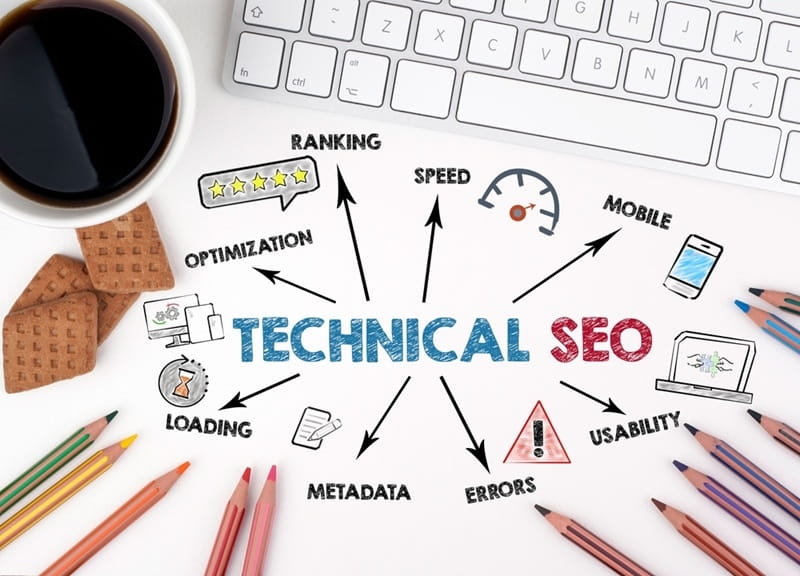
Content alone isn’t enough in the competitive digital environment. Without a strong technical base on the site, even the best pages will not connect with an audience. Therefore, technical SEO is important.
Despite being considered too complex to handle, technical SEO is about creating a clean, accessible, and user-friendly environment for both end users and search engines. When done properly, technical SEO provides a firm foundation for all other SEO work (i.e., content marketing and link building) by ensuring a site that can be crawled, loads quickly, and is logically organized.
This SEO 101 guide explains the basics in a simple to understandable manner. The information provided derives from reliable sources such as Google Search Central, the FTC’s guidelines for digital content, and established optimization standards.
Optimizing your website for search engine crawling, indexing, and recognition; Technical SEO is about how you do it behind the scenes. The clarity of Technical SEO has an immediate impact on how pages are indexed, ranked, and returned in search results (Google Search Central).
Where Content SEO focuses on keyword strategy and the value of digital pages, Technical SEO is about ensuring the framework (or structure) of your site is set up to enable visibility and performance.
In the same way, Technical SEO is the foundation on which SEO fundamentals are built, reducing friction. A fully optimised website has a fast page load time, secures user information, and gives search engines (e.g., http://www.google.com) clear signals regarding the relevance and structure of its pages.
Better foundations build better:
If your website lacks proper Technical SEO, its valuable content will struggle to deliver performance (regardless of its authority).
A structured checklist for technical SEO helps ensure crucial items are not missed. You could compare it to a quality-control method to determine whether your website is healthy.
The role of Site Structure SEO
Site Structure SEO identifies how pages relate to each other. A logical page hierarchy allows users to navigate easily and helps search engines assess a page's importance.
Best practices include:
According to Google's documentation, your site's strong architecture will improve both crawl efficiency and index accuracy.
Even though you have a number of advanced strategies for optimizing your site, the basics of website optimization still hold a significant place in achieving success with those strategies. Examples of such include:
A technically optimized site will build trust with search engines and provide a better overall user experience for users who expect seamless digital experiences when using websites.
Properly configured technical foundations on your website will help drive organic traffic growth as you launch your site or continue evolving it.
Establish the following core technical components of your SEO:
Each of these components allows search engines to efficiently crawl your most important content, which ultimately results in better use of your crawl budget and less confusion about which pages to index.
The government and authoritative entities have established best practices for technical SEO. The search engine giant Google Search Center (GSC) sets the world's standards for crawlability/indexing/performance, and organizations such as the FTC have emphasized the need for transparency and security to build consumer trust.
Aligning your technical SEO with these trusted sources will not only help you improve your rankings in search engines but will also help you meet your regulatory/ethical requirements (particularly applicable to financial, health care, and enterprise websites).
Technical SEO isn't just something you do once and forget about; it's an ongoing commitment to delivering high-quality, high-performance, and clear website content. When you combine strong technical SEO with quality content and ethical optimization practices, it becomes a major contributor to sustainable organic growth.
By mastering technical SEO principles and using a solid technical SEO checklist, you can improve your site's SEO structure, implement the proper setup, and create an optimized site that search engines will trust and users will enjoy. Ultimately, the trust that develops between search engines and website owners translates into increased visibility, increased authority, and increased measurable business success.
Technical SEO's primary goal is to improve your website's infrastructure so search engines can crawl, index, and rank it optimally, enhancing performance, accessibility, and visibility in the long term without affecting the content messaging.
Having a Technical SEO checklist ensures that the following is done correctly: the fundamentals of site structure, speed, security, and indexing; avoiding costly errors; and maintaining consistent SEO results without interruption over time.
Technical SEO is one of the four cornerstones of an SEO foundation. It is like laying down a solid foundation that eventually enables content optimization, link building, and user experience to be successful.
Site structure SEO explains the hierarchy and importance of pages to search engines. With a clean site structure, the search engine crawler can crawl more efficiently, there is strength in the internal linking, and user navigation is uncomplicated. All three of these elements contribute to achieving better SEO results, both in rankings and in indexing.
A Technical SEO review/audit should be performed quarterly or immediately after major website changes, such as copying content from another website, a complete redesign, migration, or updating a CMS system. Performing Technical SEO audits/assessments will help identify and correct issues, such as crawl errors, speed issues, or indexing issues, before they negatively affect your website's performance.
Yes, proper SEO setup ensures your website follows search engine guidelines from the start. It prevents technical debt, improves scalability, and supports consistent organic growth as content and authority increase over time.
This content was created by AI